About the Organization
The Vermont Department of Transportation (VTrans), part of the Vermont Agency of Digital Services, operates a complex technology landscape spanning systems from the 1970s to the present day. As they pursue a multiyear modernization plan, they needed an integration layer flexible enough to connect legacy systems with modern infrastructure while adapting as the underlying architecture evolves.
Their DMV application needed data from both a 1970s-era IBM S370 mainframe and modern Oracle databases — systems that were never designed to communicate with each other and couldn't easily share data without significant custom development.
The Challenge
Vermont DOT faced a unique integration challenge spanning technology generations:
Legacy system integration: Production systems include an IBM S370 mainframe (1970s technology) alongside modern Oracle databases — requiring connectivity to both without replacing either.
DMV front-end requirements: The DMV application needed real-time data from both the mainframe and Oracle databases, presented through a unified interface for staff and citizens.
Multiyear modernization program: Infrastructure is continuously evolving as part of a long-term modernization plan, requiring an integration layer that can adapt without rebuilding from scratch at each phase.
Government procurement constraints: Solutions needed to work within state government procurement processes and budget cycles while providing enterprise-grade reliability.
The Solution
DreamFactory was deployed as the integration layer bridging Vermont's legacy and modern systems:
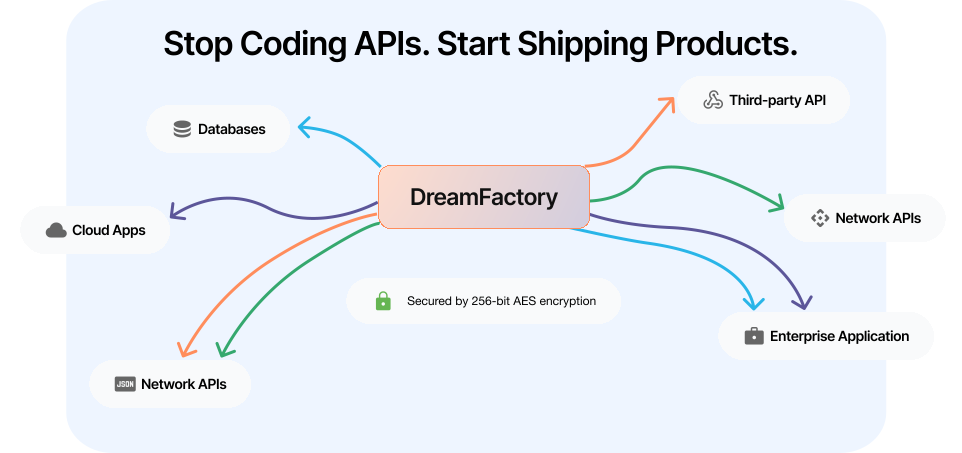
Mainframe connectivity: Direct integration with the IBM S370 mainframe providing REST API access to legacy data — without requiring mainframe modifications or replacement.
Oracle database integration: Simultaneous connectivity to modern Oracle databases through the same platform, providing unified API access across technology generations.
DMV application support: The DMV front-end accesses data from both mainframe and Oracle sources through standardized APIs, providing a seamless experience regardless of the underlying data source.
Modernization adaptability: As Vermont's infrastructure evolves through their multiyear modernization program, DreamFactory adapts to new systems and architectures without requiring complete re-implementation.
The Results
7+ year platform tenure: DreamFactory has served as Vermont's integration backbone through multiple phases of their modernization program — demonstrating genuine long-term reliability in government infrastructure.
Legacy-to-modern bridge: The 1970s mainframe and modern Oracle databases are seamlessly connected through governed APIs, providing unified data access without replacing either system.
DMV service continuity: Citizens and staff access DMV services powered by data from both legacy and modern systems, with no visibility into the underlying technology complexity.
Modernization flexibility: As Vermont's infrastructure evolves, the API layer adapts — avoiding the need to rebuild integrations at each phase of the modernization program.
The 7+ year tenure spanning a 1970s mainframe to modern Oracle databases represents one of the most architecturally diverse integration challenges in DreamFactory's portfolio — proving the platform's ability to serve as permanent infrastructure in even the most complex legacy environments.